Memory and meaning
What helps a child remember a rhyme, and how might that inform the way we teach a lesson?

How do children remember, learn together, and find meaning in a lesson? These are some of the questions that guide Pushpavalli's work with students and teachers.
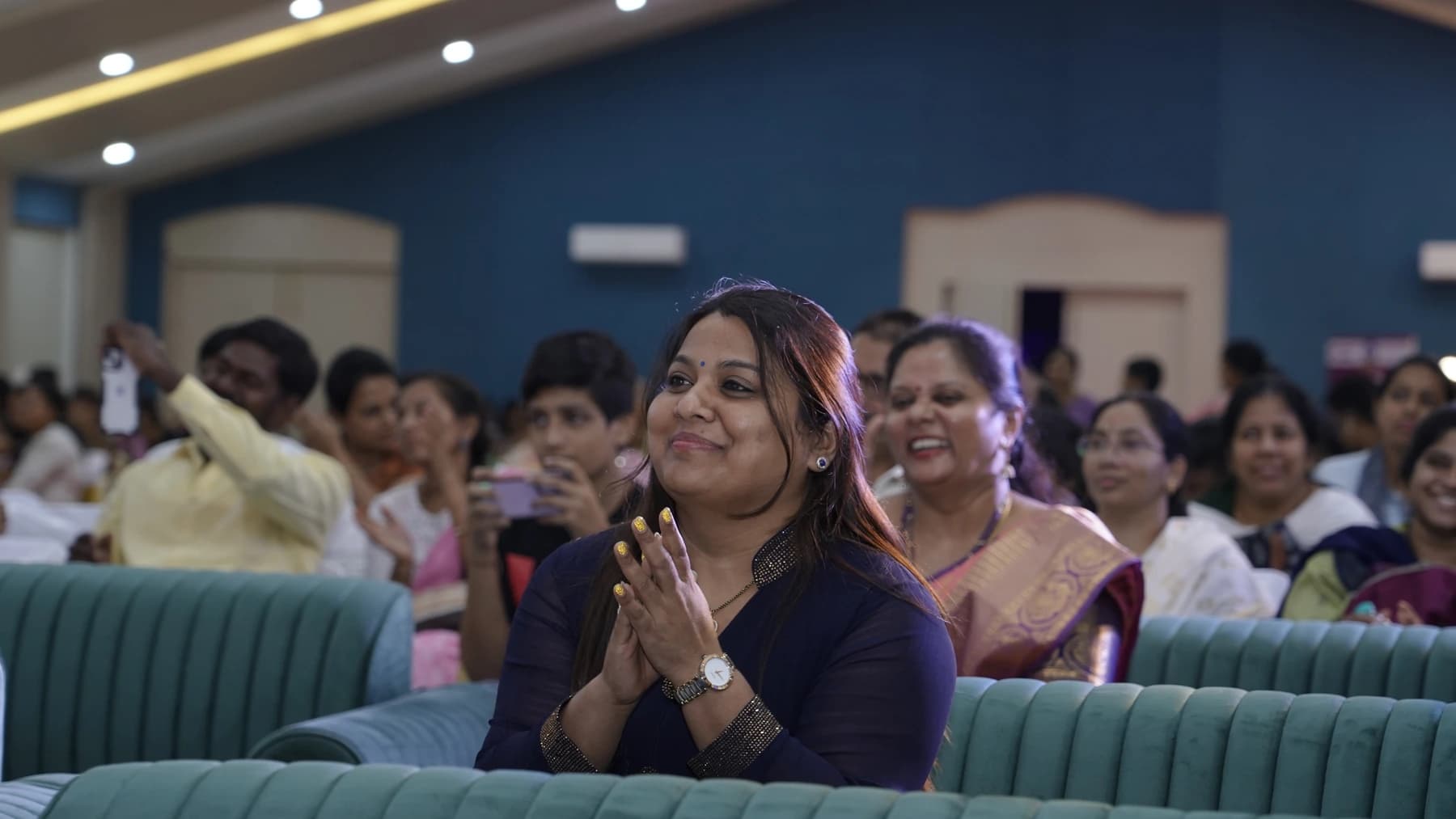
Her early work at Rishi Gurukulam introduced Pushpavalli to learning through voice, rhythm, peer teaching, and memory techniques. Those experiences prompted a continuing inquiry into how children understand, retain, and apply knowledge.
She draws on the Gurukul tradition and her studies in child psychology, cognitive science, and educational neuroscience to explore four questions about learning.
Understanding where a child gets stuck and what support could help them move forward.
Helping children make sense of an idea, remember it, and use it beyond the lesson.
Understanding how a child's surroundings, relationships, and everyday experiences affect learning.
Adapting lessons to what a child already understands, their pace, and the support they need.
What helps a child remember a rhyme, and how might that inform the way we teach a lesson?
What can children learn from one another, including classmates of different ages?
How can voice, rhythm, and movement become part of a lesson?
How can teachers respond to what a child understands and is ready to learn?
What place might movement, quiet reflection, and daily routines have in preparing children to learn?
How can schools contribute to the lives of families and their communities?
These questions also inform Prapoorna Neurovidya, the approach Pushpavalli draws on in her curriculum and teacher development work.